
Organizations as Class and Bad Boy Clerics
The relic is holy, not you.

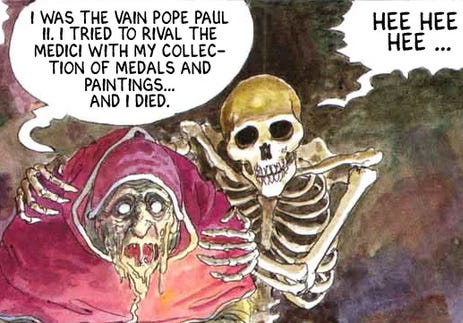
I don’t want to play as a saint.
I don’t even want to play a flawed character.
I want to play as a blaspheming, bastarding, bad boy cleric.
I’m not the first person to point out that the fantasy religions of your standard Dungeony-Dragon game don’t actually require faith.
Once you see someone’s prayer actually make wounds close you aren’t really believing in anything so much as accepting obvious facts.
A lack of faith makes for a lack of ambiguity. Where’s the room for a good schism or a doctrinal dispute? Does a priest actually need piety or will the gods intervene if anyone recites the right words? And how in God’s name do I run a crooked cleric, selling indulgences and breaking vows, when their spellcasting powers seem to give them their god’s tacic approval?
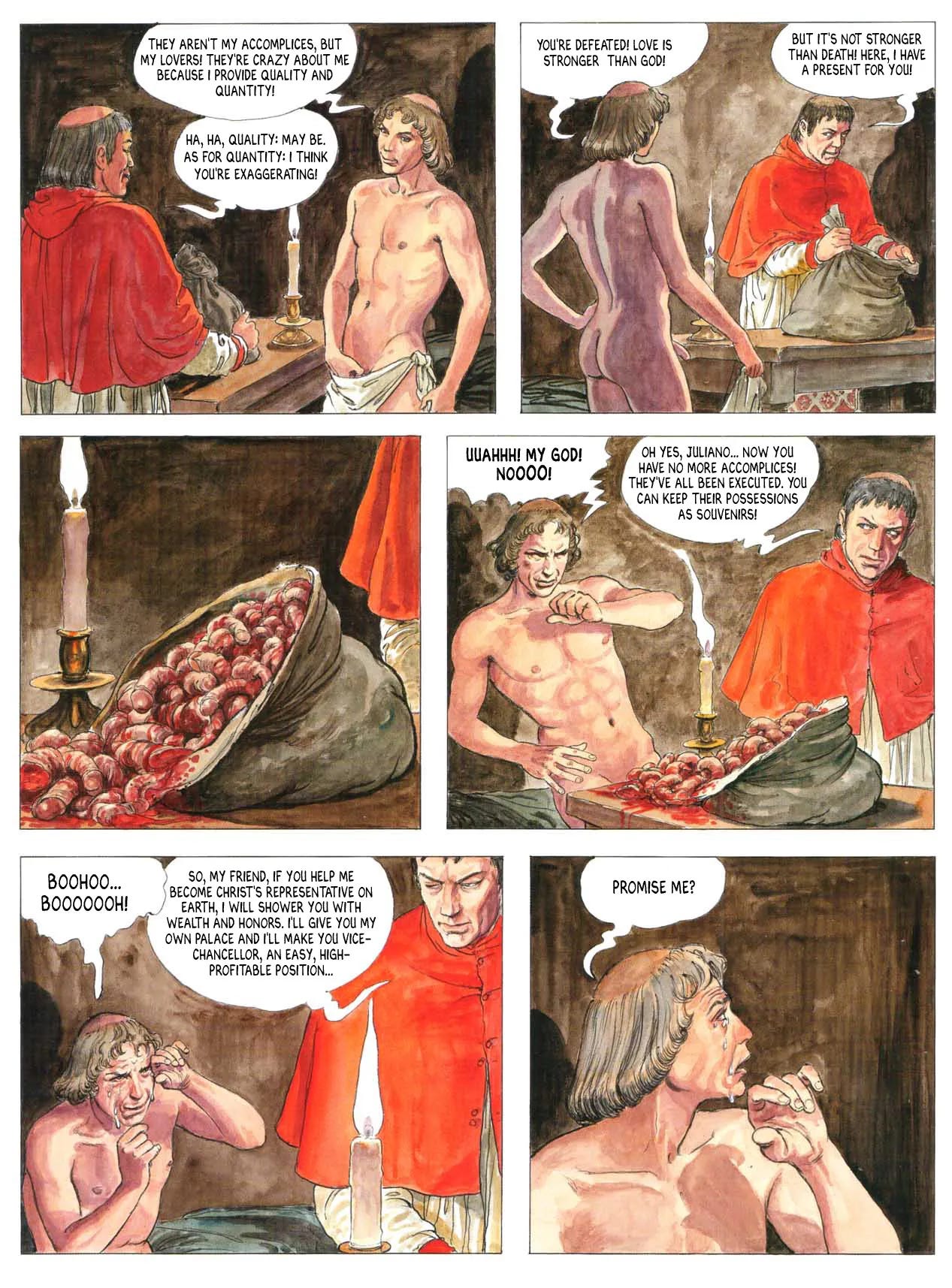
I’m not the first person to address this. The Eberron setting’s distant gods are one answer to this problem.
Here’s another:
In The Kingdoms of Kazinia most magic items come about by accident.
Most people who can levitate or turn into wolves didn’t set out to gain these powers, they just touched the wrong artifact or stood near an unstable leyline and then rationalised it later as divine intervention. Granted, sometimes this is due to meddling of higher power but more often, people get struck by magic in the same way they get struck by lightning.
(This happens to some people more than others, exploring a dungeon is like running outside in a thunderstorm holding a weathervane)
While many of the ensuing changes might get you hunted down as a monster, or burnt as a witch, with the right spin and a few good deeds you might be recognised as a saint.
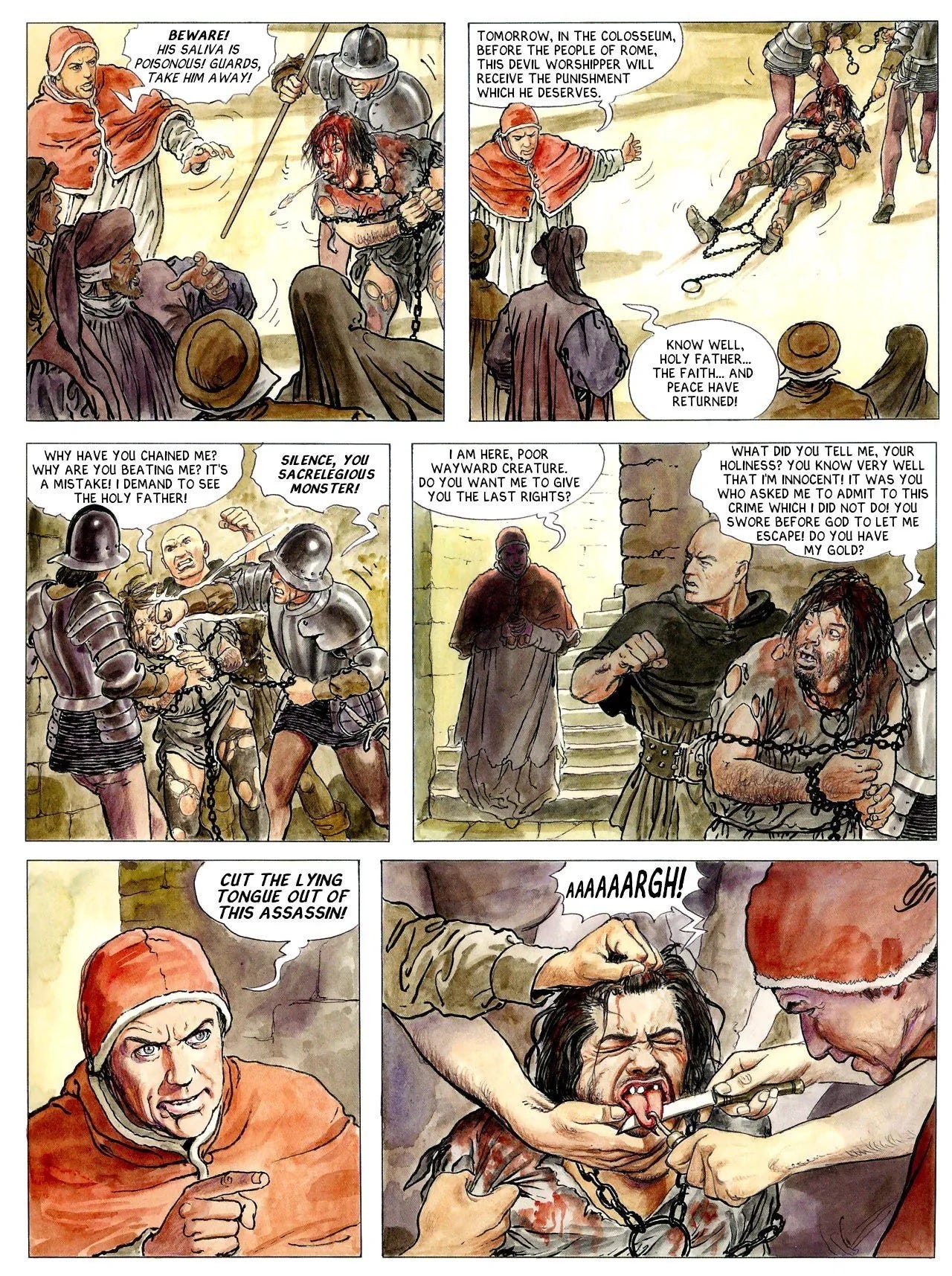
Such blessed individuals are known to leave traces of their power behind them. Magic lingers in their bones and their treasures. The fingerbone of St Beega points you away from danger. The stave of St Arfo banishes phantoms when brandished. The stone that supposedly crushed St Tibian to death has been said to grant oracular visions, good fortune and cure gout.
It’s common for religious orders to form around saints and the divine gifts they leave behind. Divinity is far off and abstract but it’s physical evidence is proof of providence. As such a church’s power and prestige derives from the quality of its relics. While religious schisms aren’t common in Kazinia, competition over relics can tip over into violence at times.
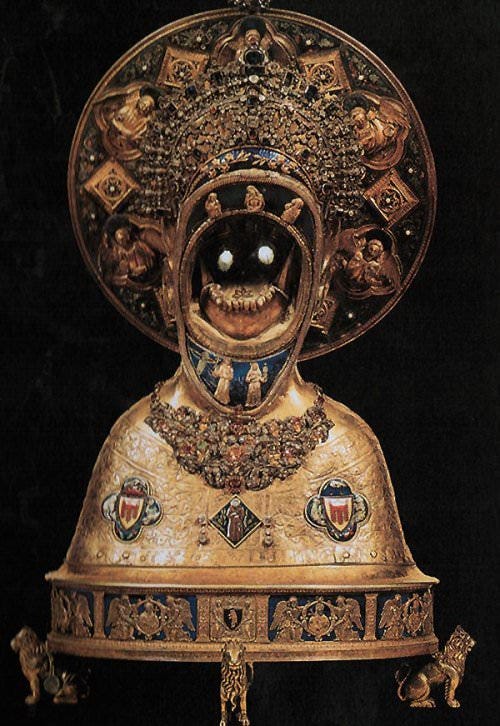
Sects will often go to great lengths to incorporate a magic item into their mythos. Really any piece of junk that could plausibly be dated to the arrival of St. Caligro’s fleet will find a cozy shrine among the Brothers of Eternal Vigilance. Forgery too, is rampant. There are over twenty five churches in the kingdoms which claim an arm of St Basklin in their collection, despite it being widely known he only had five.
Spellslinging clerics, then, aren’t divinely chosen, they’re just the person holding the relic. Of course the key here is that a church would never let just anyone hold a relic. You’ll need to gain the trust of it’s leadership first.
The process of becoming an actual acolyte is arduous and doesn’t makes for good adventuring material. Thankfully an adventurer rich with treasure can find themselves fast tracked up the ranks with a few well placed donations. Sects vary in how explicitly this bribery takes place, but whether it’s funding the next temple or the archdeacon’s gambling habits, the result is the same. Your kindness will be rewarded with access to increasingly powerful relics.
If you want to make this convenient for yourself just make the cost of gaining a rank in a church hierarchy exactly as much as the gold cost a cleric would require to level up. Religious orders are particularly interested in acquiring relics and will award extra experience for them. You may even be treated as higher rank if the adventure you’re setting off on holds the promise of a new relic or further’s church interests. Of course, you can expect to lose experience with a sect if their relics aren’t returned or if they catch wind of behavior out of step with church teachings.
There are thousands of bejeweled bones rattling around a hundred churches in the Kingdoms of Kazinia. So every reliquarian can have a unique spell library. You could even mix and match with different churches if you can keep the doctrines straight. Here’s a sample sect to get you going.
D20 Relics of the Brothers of Eternal Vigilance

Relics of the 1st Class
Footbones of St. Gavana: Brings good fortune to travellers. When traveling overland, the GM rerolls encounters and picks the most beneficial one.
Pelvic Bone of St Antorus: Trembles in the presence of adulterers. Misleading, actually trembles in the presence of venereal diseases.
Lamp of Sister Osiuca: Blood placed inside will burn like oil. Functions underwater and resists extinguishing.
Sandals of Kesh: Wearer always miraculously avoids stepping on anything harmful. Ignore caltropes and similar terrain hazards. Trips you before you step into traps. Only really concerned with protecting your feet.
Relics of the 2nd Class
Collected Sermons of Saint Farno: When read from, animals will understand and can be convinced into taking action if it’s sufficiently virtuous.
Finger of Saint Afious: Always points in the direction of the nearest person willing to offer the holder charity.
Grail of Promog: Liquids or foods placed within are cleansed of poison, disease and flavor.
Spear of Saint Caradina: Sentient weapon. Drains the blood of those harboring secret thoughts of betrayal, for double damage. Actually the demon spear of Trokus the Paranoid. Originally kept to stop it falling into the wrong hands, the spear invented a fake backstory and saint.
Relics of the 3rd Class
Skull of Arcaus: Offers a chance at redemption for evil spirits by allowing them to serve the holder as zombies. Undead return to eternal slumber after accomplishing a good deed.
Indestructible Femur of Saint Fortifax: Functions as an adamantine club. An experienced blacksmith can tell you it IS just an adamantine club crudely shaped into a thighbone.
Foreboding Face of Saint Boyne: Demons and undead cannot approach the face without closing their eyes.
Giving Cup of Saint Fastion: Blood drained into this cup from a living being restores hit points to the drinker equal to half those depleted from the donor. Symbols of the Talunian blood cult have been carefully filed off.
Relics of the 4th Class
Imperishable Loaf of Saint Madon: Loaf of bread which slowly regenerates bites taken out of it. Filling but stale.
Banishing Warhammer of Saint Godon. A solid strike removes the effect of ghostly or demonic possession on a target. And a few teeth.
Brave Talisman of Saint Crun: Grants advantage to saves against fear. Totally unmagical, but the placebo effect still works for true believers.
Scales of St Andus: When a pair of possessions or body parts belonging to two people are weighed against each other. The most evil of the two will always weigh more. Church rules forbid using this to settle doctrinal arguments.
Relics of the 5th Class
Habit of Saint Caduro: Wearer is immune to the effects of hot weather, resistant to fire and has a +2 bonus to resisting lustful thoughts.
Flaming Sword of Saint Duffin: Ignites with purple flames on speaking the command word “Hazokus!”. It’s unclear what this phrase means and worth mentioning that not a single account of Saint Duffin’s life mentions him owning a flaming sword.
15th Plague of Saint Bo: Wooden box allegedly containing the plague never released by the merciful Saint Bo. To be used strictly as a sign of its holder’s power and restraint. Do not actually open the box.
Guiding Lectern of Saint Piletus: Once per day can be consulted to give guidance on any question. Gives answers by opening a particular page in whatever book is placed on it. We trust you not to ask the saint any personal questions. Ever.